A Glimpse Into Chimbote
and the Mission
A Typical Chimbote Home
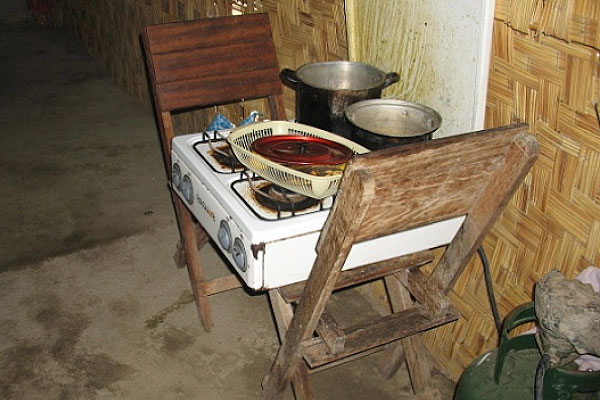
Chimbote is a small city located in a desert region along the coast of Peru. It is one of the poorest areas in the country with 50% to 80% unemployment. Mining and fishing are the top industries. Annual rainfall is less than one-half inch. In the barrios, the poorest families typically live in one- or two-room shacks made of woven reed mats. These “houses” frequently share walls for support, so they are fastened together in long rows. The floor is dirt or concrete and there are no windows. Furniture, if any, is sparse.
There is no indoor plumbing for fresh water or sanitation in the barrios. Water is scarce, and people must carry it home in a bucket. These homes do not have dependable electricity, so there is no refrigeration for food. Some families can afford a propane burner for cooking. Many others cook over an open fire inside their shack, which is a constant health and safety hazard. If the straw walls ignite, the only way to keep the fire from spreading through the barrio is to tear down the adjoining shacks and attempt to douse the flames with sand.
An Oasis in the City
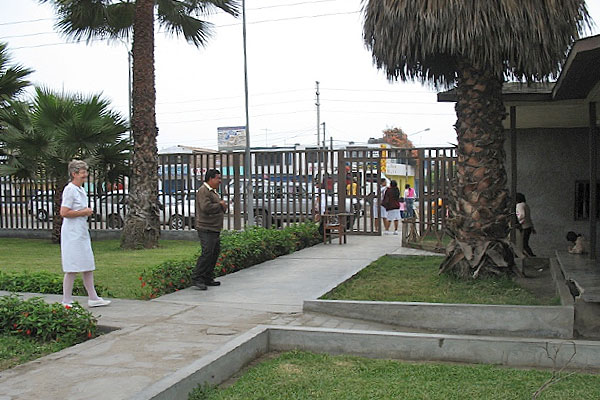
In the center of the city, you will find paved roads busy with honking cars, taxis, and buses. The smell of fish and smoke from the processing plants and factories lingers in the warm air. It is in this setting, next to the busy main road, that you will find our Center for Social Works (Centro de Obras Sociales, or COS) and the Maternity Hospital of Mary (Maternidad de Maria). The unobtrusive fenced compound is an oasis in both the literal and figurative sense.
Walking through its gate, visitors find a clean campus where sidewalks traverse tidy green lawns surrounding the simple grey and tan buildings that house the maternity hospital, outpatient clinic, clinical laboratory, and children’s center. It is a Christ-like refuge for those marginalized by society because they are mentally, physically, or financially challenged.
The Pittsburgh Connection
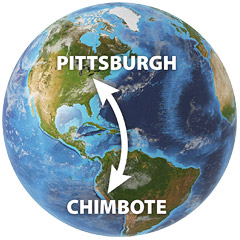
Together, all of the programs within this oasis — from the maternity hospital to the orphanage — compose the mission sponsored by the Catholic Diocese of Pittsburgh and its friends. This regionally recognized, multi-service health and education facility has grown from humble beginnings with help from parishioners throughout the six counties of the Diocese of Pittsburgh and several parishes in Grand Rapids, Michigan. Today, the Center employs over 115 professionals and support staff. It operates under the joint medical and administrative leadership of its Director, Dr. Rosa Altuna Gonzales, a local Peruvian, and the Chimbote Foundation board. The core components of the mission are the maternity hospital, the outpatient clinic/pharmacy/lab, the children’s center, and the home visit program.
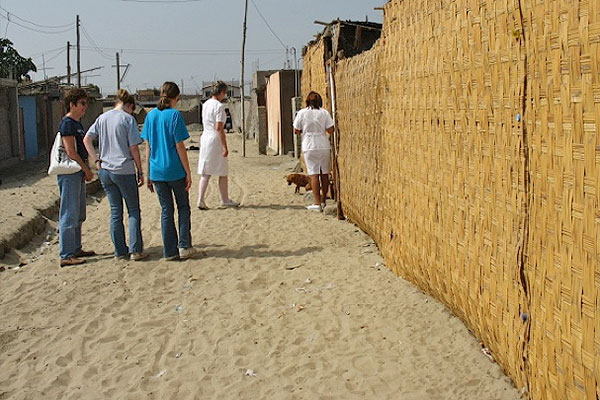
These “houses” frequently share walls for support, so they are fastened together in long rows or clusters. The floor is dirt or concrete and there are no windows.